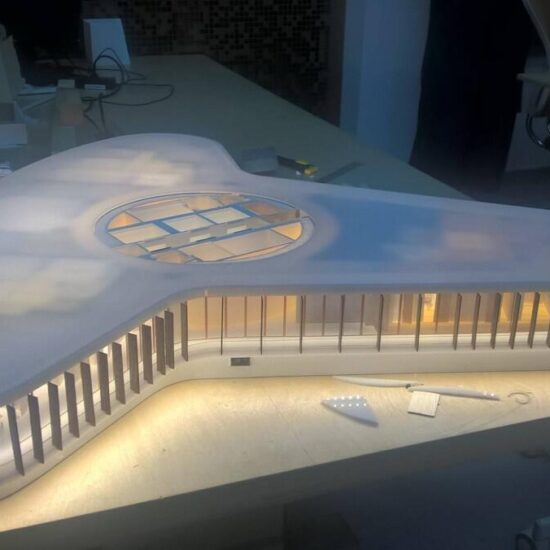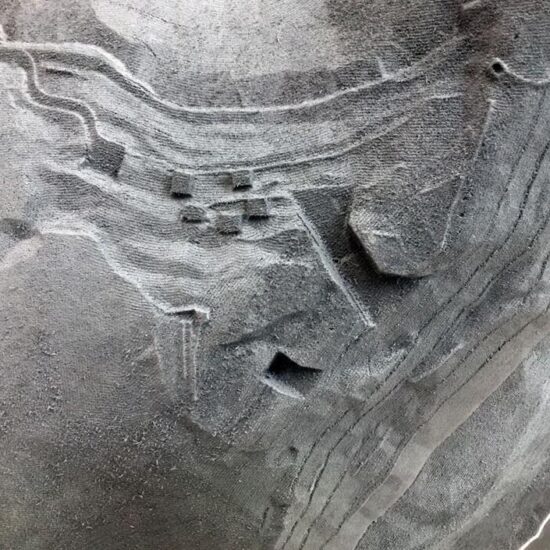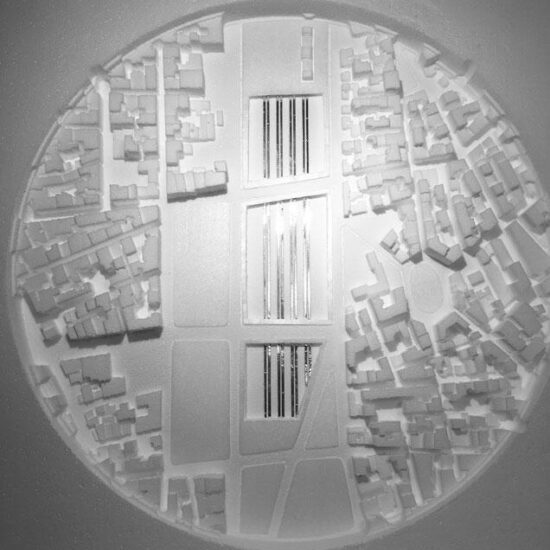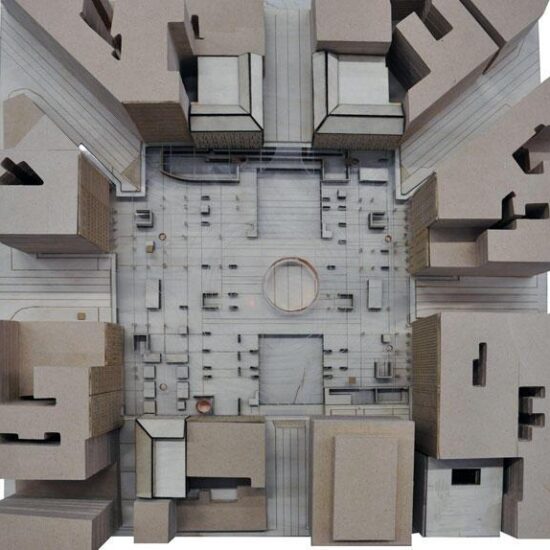




Large Scale Fabrication
We develop and produce bespoke large-scale structures, sculptural elements and site-specific installations for commercial, cultural, public and architectural environments.
Our work ranges from statement pieces and branded environments to complex spatial constructions, exhibition elements and architectural features. By combining digital modelling, CNC fabrication, material testing and hands-on construction, we realise ambitious geometries with precision and technical consistency.
For each project, materials and fabrication methods are selected according to the intended form, finish, weight, durability, transport and installation requirements.
From concept development and technical resolution to prototyping, fabrication, finishing, logistics and on-site assembly, we manage the entire process as one integrated workflow.

Art pieces & installations
We provide practical support in the construction of special forms and objects of works of art, based on the needs of each creator-artist. The scale of the constructions can range from small objects of a few millimeters, to large spatial installations for indoor or outdoor spaces. The combination of techniques and tools allows the constructional solution of complex creative problems.
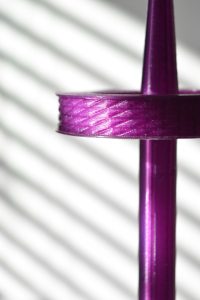
3D Printing
a. FDM 3DPrinting (Fused Deposition Modeling)
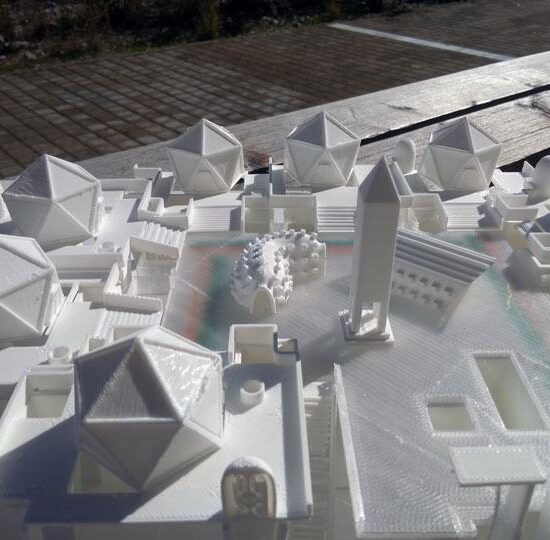
uses 3D printing technology to produce 3D objects. This type of printing is usually used for prototyping, small batch production, and hobbyist use. Although many types of 3D printing have been developed, FDM technology remains the most widespread and economical method.
Our machinery
-Bambu Lab H2S
-Bambu Lab X2D
-Bambu Lab P1S
-Bambu Lab P1P
-Bambu Lab A1
How to Design for FDM 3D Printing
- Your designs should be closed shapes.
- Avoid very thin walls, less than 1.5mm.
- Avoid warping: Thin parts of your model are prone to warping, so be sure to support them to improve their strength and avoid the risk of warping.
- Design your model in sections when it is too large to print as a whole.
- Design thin and fragile parts of your model separately so that they can be joined after printing.
- Send us the files in .STL or .OBJ format.
b. SLA 3D printing (Stereo Lithography)
uses a source of ultraviolet radiation (laser) to selectively harden photopolymerizable resin (liquid) into solid layers. It belongs to the family of tank photopolymerization, offering high precision and smooth surface, it is used for the creation of prototypes and models as it produces clean forms with high resolution, in which the layering is not visible or noticeable.
How to design for SLA 3D Printing
- Your objects must be watertight and their shell must be hollow.
- Avoid details smaller than 0.5mm.
- Send us your files in .STL or .OBJ format.
* FDM printing vs SLA printing
SLA (Stereo Lithography) printing is a 3D printing method similar to FDM. The material used is a liquid photopolymer resin that is solidified by ultraviolet radiation. FDM printing is more economical, faster, suitable for printing large objects and offers the possibility of choosing more colors. However, SLA technology provides accuracy and high resolution in models and the ability to print details.
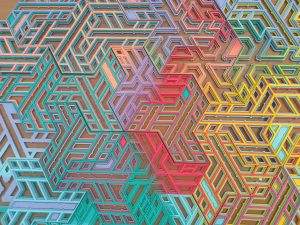
Laser Cutting
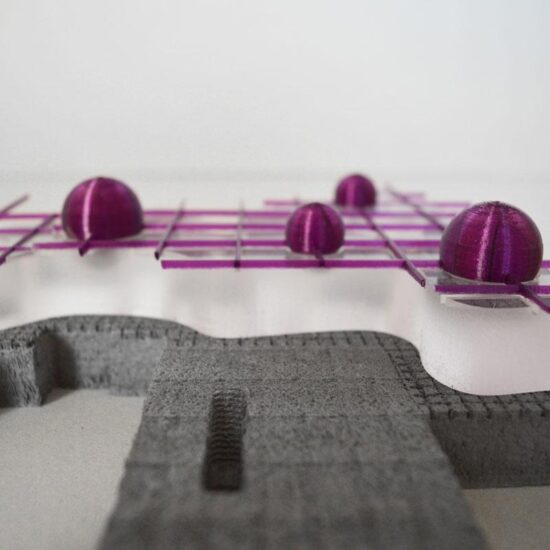
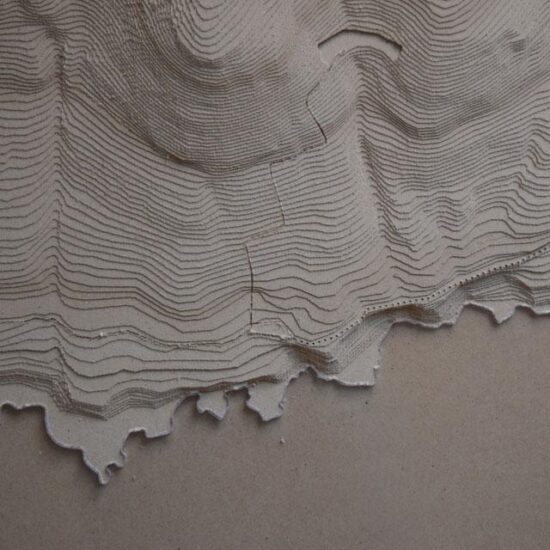
At decode we use a CO2 Glass Laser machine. With our laser cutter we can cut or engrave a wide variety of materials with precision and detail. The CO2 laser machine cannot cut metals and hard materials, but it can engrave/mark them.
Our machinery
– …
– …
Steps
- File preparation
Send us your design to see if it is suitable for our laser cutter and the material you want to use. The lines of your design should be red for cutting and blue for engraving, set to “hairline thickness”.
The depth of the engraving can vary depending on the material and your preference. There are two options for engraving a material, the vector engraving process in which the laser follows the lines of the design while engraving the material and the raster engraving process. With this method the laser engraves surfaces.
In the materials tab you can see the result of the vector and raster cutting and engraving for each material.
- Settings
Send us your design to info@decodefablab.com to calculate the time and cost of cutting.
According to the material of your choice we adjust the laser cutting machine for the best performance.
The cutting surface of the machine we have is 960x600mm so your design should fit inside that area.
The engraving process can be performed in parallel with the cutting if you have separated the lines of your design with red for cutting and blue for engraving.
- Cutting and engraving process
The machine then detects your lines and cuts or engraves the material according to them.
On some materials, to protect their surface from possible burn marks, we use a protective film, which can be easily removed after the cutting process.
- Pickup
You can pick up the material you choose to cut from our workshop or we can send it to your desired location.
Materials
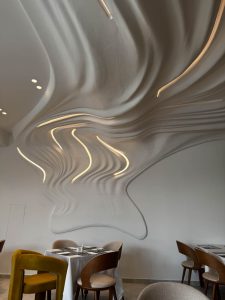
CNC Milling
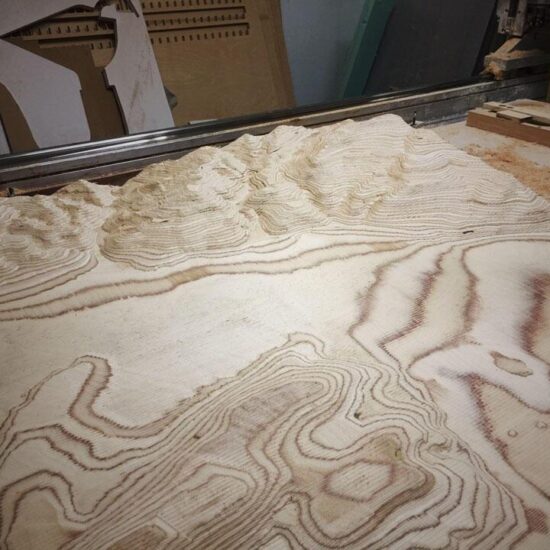
At decode we use a CO2 Glass Laser machine. With our laser cutter we can cut or engrave a wide variety of materials with precision and detail. The CO2 laser machine cannot cut metals and hard materials, but it can engrave/mark them.
Our machinery
– …
– …
File preparation
- Use CAD software to design your 2D/3D file
- Send it in .dxf/dwg or .stl/obj format.
- Contact decode fab lab for final modification of your design and its completion.
- Show all
- Architectural Models
- CNC milling
- 3D printing
- Laser cutting
- Architectural Rendering